NCMC Facts
North Central has been part of Emmet County since 1958.
3 Campus Locations + online
-
Petoskey - Main Campus
-
Gaylord Center
-
Cheboygan Center
Delivering a Quality Education
Accreditation matters because it confirms educational quality and protects students’ ability to transfer credits and receive federal aid.
North Central recently completed a reaccreditation review. The Higher Learning Commission team found that NCMC met all 18 core components demonstrating compliance with the following criteria:
- Mission
- Integrity
- Teaching & Learning
- Institutional Effectiveness
In addition, we are proud of being named among the Top 200 colleges for the Aspen Prize, our nation's leading recognition of performance in the community college sector for:
- Student Outcomes
- Effective Teaching
- Commitment to Student Success
To become the premier student-centered college, as partners on the learning journey.
As such, North Central will be recognized for its strength in transfer education, workforce development and lifelong learning, energizing the social and economic vitality of the communities it serves.
Student-Centered and Community-Focused
North Central’s vision emphasizes our continuous focus on being student-centered and partnering with learners on their journey. That includes transfer education for students going on to universities, workforce development tied to local employer needs, and lifelong learning for residents at every stage. Everything is aimed at strengthening the social and economic health of this region.
Student Profile
1,722 Students (Winter 2025)
Enrollment Status
Gender
Dual Enrollment
Program Offerings
North Central offers 70 programs across transfer, fast-track and occupational pathways.
North Central offers a wide portfolio: 19 transfer degree programs, 38 occupational programs, and 13 Fast Track programs, many of which can be completed in a few weeks to a few months. The college also offers some credentials fully online, helping learners balance work, family, and school.
Keeping College Affordable
In-District Tuition for Emmet County Students
- Tuition Per Contact Hour (2025-26)
-
- In-District $152 – A savings of $6,500+ for a 2-yr. credential!
- Out-of-District $260
- Out-of-State $330
- Free Tuition for Emmet County seniors!
Two-Year Cost of Attendance
-
- $20,000 Average savings attending NCMC full-time and living on campus for the first 2 years then transferring to a 4-year university.
Financial Aid / Scholarships
-
- $4,978,176 Total Aid Awarded in the 2023-24 Academic Year
- 80% of degree/certificate-seeking NCMC students receive grant & scholarship aid
Sources of Funding
NCMC’s 2025–26 operating budget is $21.4 million. Operating revenue comes from a combination of Emmet County property taxes, state appropriations, tuition and fees, and other sources. These components work together to keep the college running day-to-day.
| Funding source | Percent | |
|---|---|---|
| Voted Operational Millage | 20% | |
| Charter Levy | 19% | |
| Tuition & Fees | 31% | |
| State Appropriations | 24% | |
| Other | 6% |
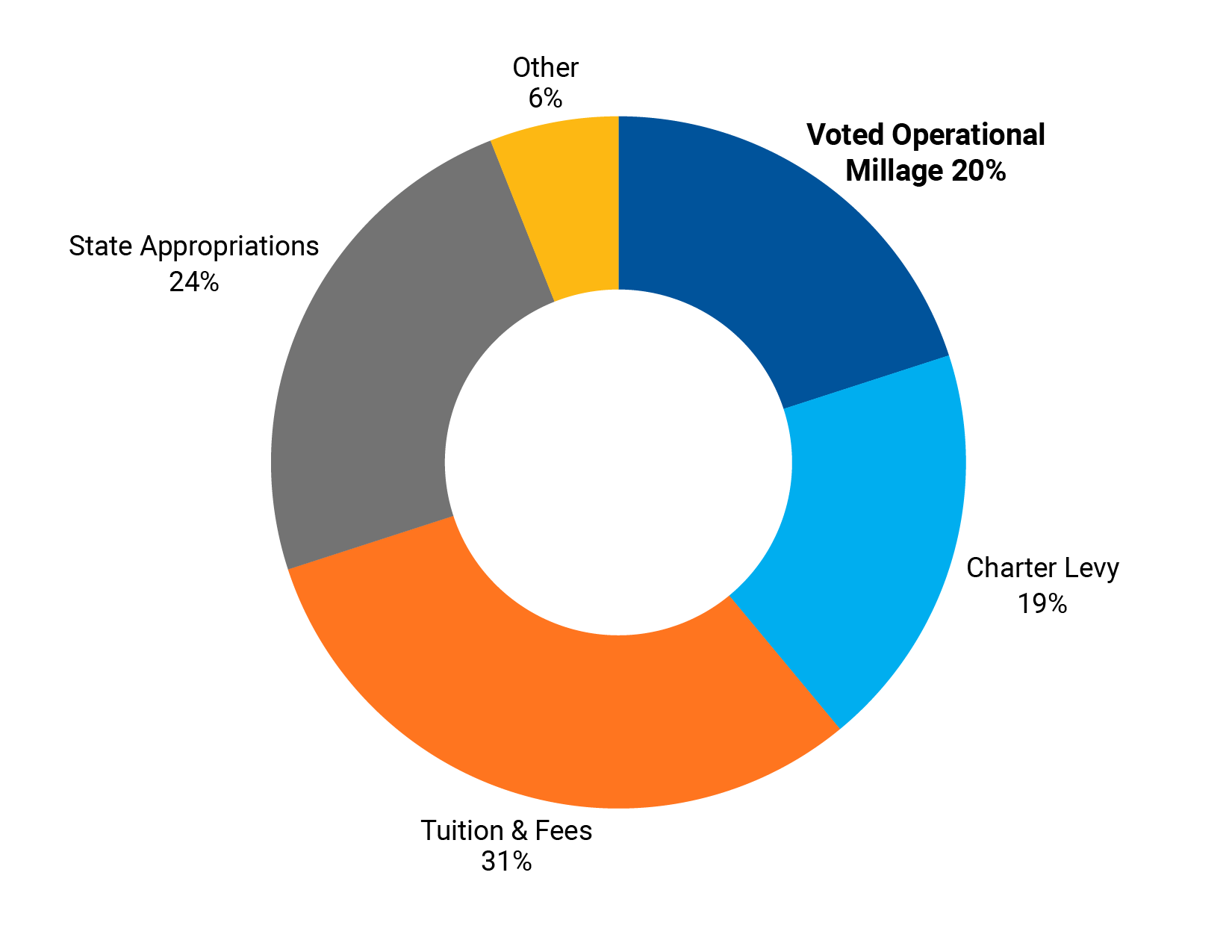
(Click on the chart to enlarge)